Helping people understand
social problems, not just
feel sorry about them
My role
I came up with the project together with my department’s team and pitched it to MTS leadership as a side project. Later I built a dedicated team for it, and the project kept growing.
My team
First, my department’s team, alongside their main work. Then a dedicated team of its own.
The problem
In Russia, people tend to give on impulse, to a person they can see. Much of this comes from distrust of non-profits that goes back to the turbulent 1990s. But one-off help is far from the most effective way to solve problems that run deep. Systemic charity, which works on their causes, has proven itself around the world, yet it never took hold in Russia.
MTS had a gap of its own. It supported many social projects, but ordinary people did not know about them. Our challenge was to explain what systemic charity is and bring people into it, and to give MTS a voice on social issues that people would hear.
The idea
We set out to build a media project about how social problems work. Each quarter would take one stage of life, from childhood to old age, and a problem that comes with it. We called it Nas Kasaetsya, which means “It’s on us”: social problems concern all of us.
Each topic would follow the same path: the facts behind the problem, stories of people who live with it, and a list of charities that work on its causes, which anyone can support.

in the original Russian
What we built
We launched the project in April 2022. Our first topic was orphanhood.
We started there because orphanhood shows best why one-off help is not enough. More than 80% of children in Russian care have a living parent: they end up there because their family is in crisis. New Year presents for children in care change none of this. Support for families in crisis does.
What made it work
Facts, not pity
The first story gathered nine facts about orphanhood in Russia: why children end up in care, which children foster families are ready to take, why some are sent back, and who helps them.
Real families
Three foster families told how they faced the myths about adopting a child from care, and how their own lives proved those myths wrong.
Charities that measure their impact
We partnered with charities that measure the social impact of their work, and helped others start. Their experts commented on every story, so readers could trust the facts and see where their money would go.
The film: Lena’s story
To solve a problem, people need to understand it, and to understand it, they need to feel it. So the special project included a short documentary. Instead of a child to pity, we showed an adult who grew up in a children’s home. Today Lena runs her own football team and teaches juggling.
In five short episodes, Lena goes through the stages everyone knows: school, first love, leaving home. Viewers recognised each one, and then saw how different it looks when you grow up without a family, with no grown-up to trust and no one to teach you how to show your feelings or handle money.
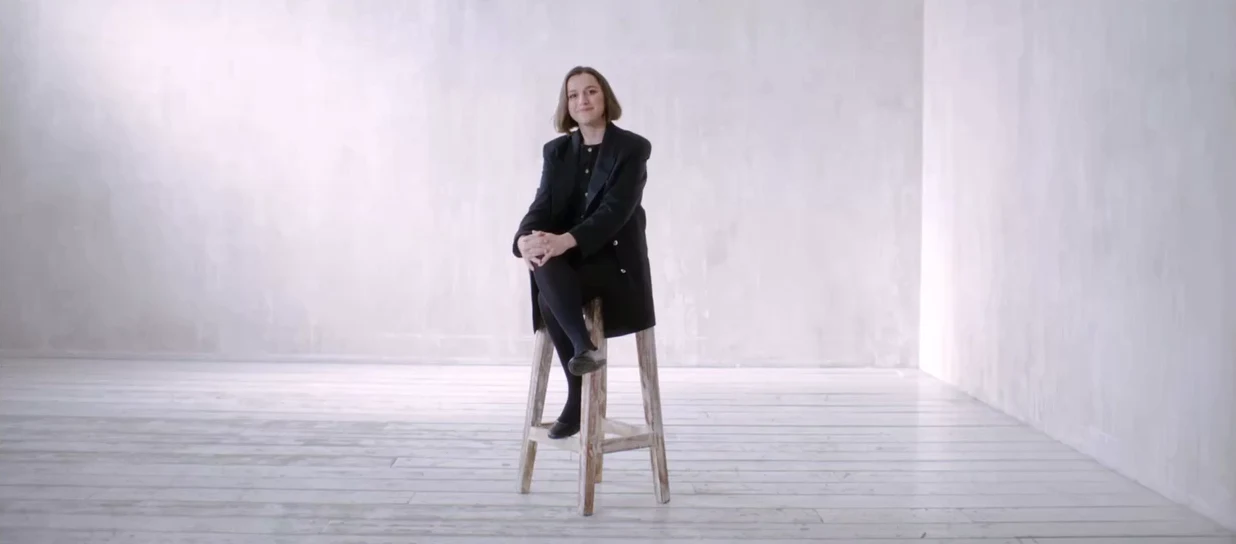
Orphanhood: Prologue. Five episodes, 10 minutes
The topic closed with six charities that work on the causes of orphanhood: they help families in crisis keep their children, prepare foster parents and support young people leaving care. Every story pointed readers to them.
What happened next
The project was backed by MTS’s vice presidents for HR and for marketing, and employees across the company responded to it from the first weeks.
Later, it moved from a media project into a giving platform ↗. Today it works with 20+ trusted charities from Russia’s regions, and people can donate in a couple of taps or give away their MTS Cashback.
One idea from our first concept made it into the product: during charity weeks, MTS doubles every donation to partner charities.
Results
As of November 2026
- 201K
- people give
through the project - ₽54M+
- MTS Cashback given
to charities in 2024 - ₽139M
- raised by the project’s
users for charities
Takeouts
Working on Nas Kasaetsya (It’s on us) taught us that people do not need to be pitied into giving. They need to understand. When we showed the causes behind a problem and a real person living with it, the conversation moved from “poor children” to “what actually helps”.
We also learned that a big company changes slowly, and that is fine. Convincing MTS to bet on systemic charity instead of simple, visible help took patience and many arguments. But once the idea took root, it kept growing without us.
The hardest lesson came in 2022. When the world around us shifted, charities needed help more than ever, and we saw how fragile one-off giving is. Regular, informed support is what keeps their work going.